


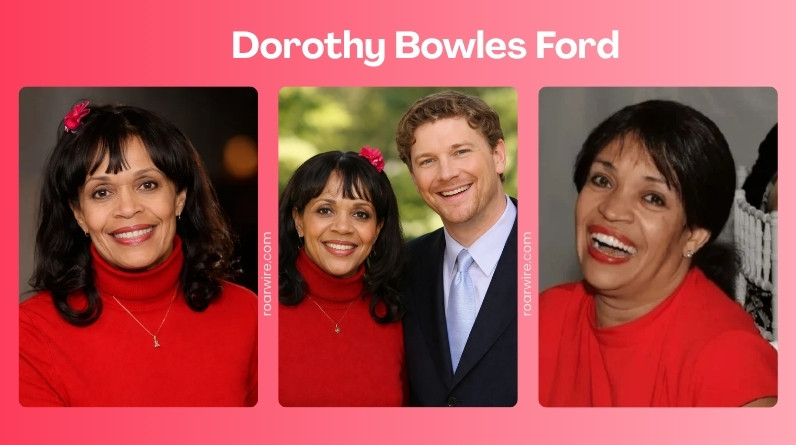
- Dorothy Bowles Ford is best known as the mother of Harold Ford Jr. and former wife of Harold Ford Sr.
- Born in Memphis, Tennessee around 1949, she grew up during the Civil Rights era.
- She worked professionally at Potomac Electric Power Company (PEPCO) as a consumer coordinator.
- Also contributed directly to Harold Ford Sr.’s congressional office in an administrative capacity.
- Played a key behind-the-scenes role in one of Tennessee’s most prominent political families.
- Divorced Harold Ford Sr. in 1999 after three decades of marriage.
- Today, she lives a private life, with lasting influence through her children and grandchildren.
Introduction
Dorothy Bowles Ford is a figure closely connected to one of America’s notable political families. While she never held public office, her influence is deeply tied to the rise of her son, Harold Ford Jr., and the historic political career of her former husband, Harold Ford Sr.—the first African-American congressman from Tennessee.
What sets her apart is not public visibility, but impact. Her role in shaping a political legacy—through family, values, and quiet, consistent support—makes her an important yet often overlooked figure in modern American political history.
Quick Facts
| Full Name | Dorothy Bowles Ford |
| Date of Birth | Circa 1949 |
| Age | Mid-70s (approx.) |
| Birthplace | Memphis, Tennessee, USA |
| Nationality | American |
| Profession | Consumer Coordinator & Administrator (PEPCO) |
| Years Active | 1970s–1990s (estimated) |
| Marital Status | Divorced (1999) |
| Children | Harold Ford Jr., Newton “Jake” Ford, Sir Isaac Ford |
| Net Worth | Not publicly disclosed |
Early Life & Background
Birth and Upbringing in Memphis
Dorothy Bowles Ford was born in Memphis, Tennessee, a city woven deeply into the history of the Civil Rights movement. Growing up there meant exposure to major social and political shifts from an early age—marches, legislation, and community organizing were part of the backdrop of daily life.
That context matters. It likely shaped her values around equality, community responsibility, and public service—principles that would later define how she raised her children and supported her family’s public work.
Civil Rights Era Influence
Living through a transformative period in American history meant Dorothy witnessed firsthand the struggles and hard-won progress of African-American communities in the South. That experience built a strong foundation of resilience and civic awareness that would run through everything she did.
Family Background
Details about her parents and early family life remain private. This reflects a consistent pattern throughout her life—maintaining personal privacy despite very public connections.
Education
Memphis State University
Dorothy attended Memphis State University but did not complete her degree. That decision appears to have been shaped by shifting priorities—early family commitments and a future that would demand much of her time and energy in other directions.
It was a common reality for women of her generation, where education and family life often competed, and where many chose to invest in the people around them rather than credentials for themselves.
Career Journey
Role at Potomac Electric Power Company (PEPCO)
Dorothy Bowles Ford built a steady professional career at Potomac Electric Power Company, where she worked as a consumer coordinator. Her responsibilities included managing customer concerns, overseeing energy consumption matters, and navigating regulatory processes—work that required organization, clear communication, and the ability to handle complex issues under pressure.
That professional track record is worth noting, because it establishes her as someone with a career identity entirely her own, separate from the political family she was part of.
Balancing Career and Family
While raising three sons and keeping a political household running, she maintained her corporate responsibilities without much public acknowledgment. The balance she struck between personal and professional demands was real, even if it rarely made headlines.
Behind-the-Scenes Political Support
Dorothy’s contributions extended beyond the home. She managed administrative duties directly for Harold Ford Sr.’s congressional work and, notably, collaborated with the U.S. Department of Agriculture on efforts to improve school lunch programs in Tennessee—a practical, community-facing initiative that spoke to her broader sense of civic responsibility. Her role was rarely visible, but it was genuinely substantive.
Marriage to Harold Ford Sr.
Early Relationship and Marriage
Dorothy and Harold Ford Sr. met as high school sweethearts in Memphis. They married in 1969—Dorothy was around 20, Harold around 24—beginning a partnership that would span three decades and produce three sons.
Life During a Political Career
When Harold Ford Sr. became the first African-American representative from Tennessee in 1975, the family’s private life became inevitably tied to public scrutiny. Political life brings pressure that extends well beyond the elected official, and Dorothy’s role was to hold the household together through campaigns, controversies, and congressional sessions that kept her husband in Washington for extended periods.
Divorce in 1999
After roughly 30 years of marriage, the couple divorced in 1999. Harold Ford Sr. remarried that same year—his second wife, Michelle Roberts, a former executive director of the National Basketball Players Association. Dorothy, for her part, chose a different path entirely: stepping away from public life and focusing on family.
Family and Children
Harold Ford Jr.
Her eldest son, Harold Ford Jr., followed his father directly into politics—becoming one of the youngest African-American members of Congress when he was elected in 1996 at age 26. He served Tennessee’s 9th congressional district for a decade, from 1997 to 2007. After leaving Congress, he went on to build a career in finance, eventually becoming Executive Vice President and Vice Chairman of Corporate & Institutional Banking at PNC Bank. His trajectory reflects the discipline and sense of public purpose Dorothy helped instill.
Newton “Jake” Ford
Jake Ford carved out his own political path, most notably running for his brother Harold Jr.’s former congressional seat as an independent candidate in 2006—an effort that ultimately fell short but underscored the family’s deep investment in public service.
Sir Isaac Ford
The youngest son has maintained a largely private life. He did make a brief foray into local politics, running for the Memphis City Council in 2003, though without success. Since then, he has remained largely out of the public eye.
Parenting Influence
Dorothy placed emphasis on education, accountability, and community awareness. In a household where politics was a constant presence, she made sure those values stayed grounded in something more personal than ambition—a sense of genuine responsibility to others.
Also Read: Wendy Etris – Biography & Family Life
Major Influence on Harold Ford Jr.
Harold Ford Jr. has spoken openly about his mother’s role as the steadying presence in the household while his father was in Washington. She was not simply a supportive bystander—she was an active shaper of his values, his work ethic, and his understanding of what public service actually demands of a person.
That kind of influence is difficult to quantify but easy to trace. The discipline, integrity, and community focus that defined his congressional career reflect something he learned at home long before he ever set foot on a campaign trail.
Major Works / Achievements
- Maintained an independent professional career at PEPCO as a consumer coordinator
- Managed administrative functions for Harold Ford Sr.’s congressional office
- Collaborated with the U.S. Department of Agriculture on school nutrition initiatives in Tennessee
- Helped raise a two-generation political legacy while preserving a strong private identity
Her achievements don’t fit neatly into a résumé or a press release, but their reach is long—measured in careers shaped, communities served, and a family that carries her influence forward.
Net Worth
Dorothy Bowles Ford’s individual net worth is not publicly disclosed. She has consistently maintained financial privacy, and any estimates in circulation are unverified. Financial context around the Ford family more broadly is typically associated with Harold Ford Sr. and Harold Ford Jr.’s respective careers rather than Dorothy’s personal wealth.
Personal Life
Life After Divorce
Following the 1999 divorce, Dorothy chose a deliberately private lifestyle, stepping back entirely from the political world she had navigated for decades. She did not remarry and has focused her energy on family—her sons and, in more recent years, her grandchildren.
Privacy and Lifestyle
She maintains no public social media presence and rarely surfaces in press coverage. For someone with her family ties, that level of privacy takes real, sustained effort—and it’s become as much a part of who she is as anything else in her story.
Latest Updates / Current Status
As of recent years, Dorothy Bowles Ford is believed to be living a quiet, family-centered life in the United States. Reports have placed her in both Tennessee and New York at different points, though she has confirmed nothing publicly. She occasionally spends time with her children and grandchildren, with no known professional activities or public appearances.
That private consistency is, in its own way, a statement—a deliberate choice to exist outside the spotlight she could easily have occupied.
Dorothy Bowles Ford’s Role in the Ford Political Legacy
The Ford family’s political footprint in Tennessee stretches across multiple generations, and Dorothy sits at a critical point in that lineage. By sustaining Harold Ford Sr. through 22 years in Congress and raising Harold Ford Jr. to become a congressman in his own right, she made a genuine and irreplaceable contribution to that legacy—without ever seeking credit for it.
Her story is a reminder that political families are rarely built by elected officials alone. The people behind them carry equal weight, even when history doesn’t record their names with the same prominence.
Lesser-Known Facts
- She has maintained a remarkably low public profile despite decades of proximity to political life
- There are very few publicly available photographs of her
- She worked directly with the U.S. Department of Agriculture on school lunch programs in Tennessee
- She did not remarry after her 1999 divorce
- Her professional career at PEPCO is often overlooked in accounts that focus solely on her family connections
FAQs
Who is Dorothy Bowles Ford?
She is the mother of Harold Ford Jr. and the former wife of Harold Ford Sr., known for her supportive role in one of Tennessee’s most prominent political families.
Is Dorothy Bowles Ford married?
No. She divorced Harold Ford Sr. in 1999 and has not publicly remarried.
How many children does she have?
She has three sons: Harold Ford Jr., Newton “Jake” Ford, and Sir Isaac Ford.
What did Dorothy Bowles Ford do for a living?
She worked at Potomac Electric Power Company (PEPCO) as a consumer coordinator, handling customer and regulatory matters. She also managed administrative duties for Harold Ford Sr.’s congressional office.
Where is Dorothy Bowles Ford now?
She lives a private life in the United States—reports suggest between Tennessee and New York—focused on family and away from public attention.
What is her ethnicity?
She is African-American.
Conclusion
Dorothy Bowles Ford represents a different kind of influence—one that operates quietly but leaves a lasting mark. Through her career, her values, and her steady presence behind a politically active family, she helped shape a legacy that spans two generations of elected officials without ever seeking a piece of the recognition herself.
Her story is a good reminder that not all impactful figures stand in the spotlight. Some build the foundation that makes it possible for others to lead.